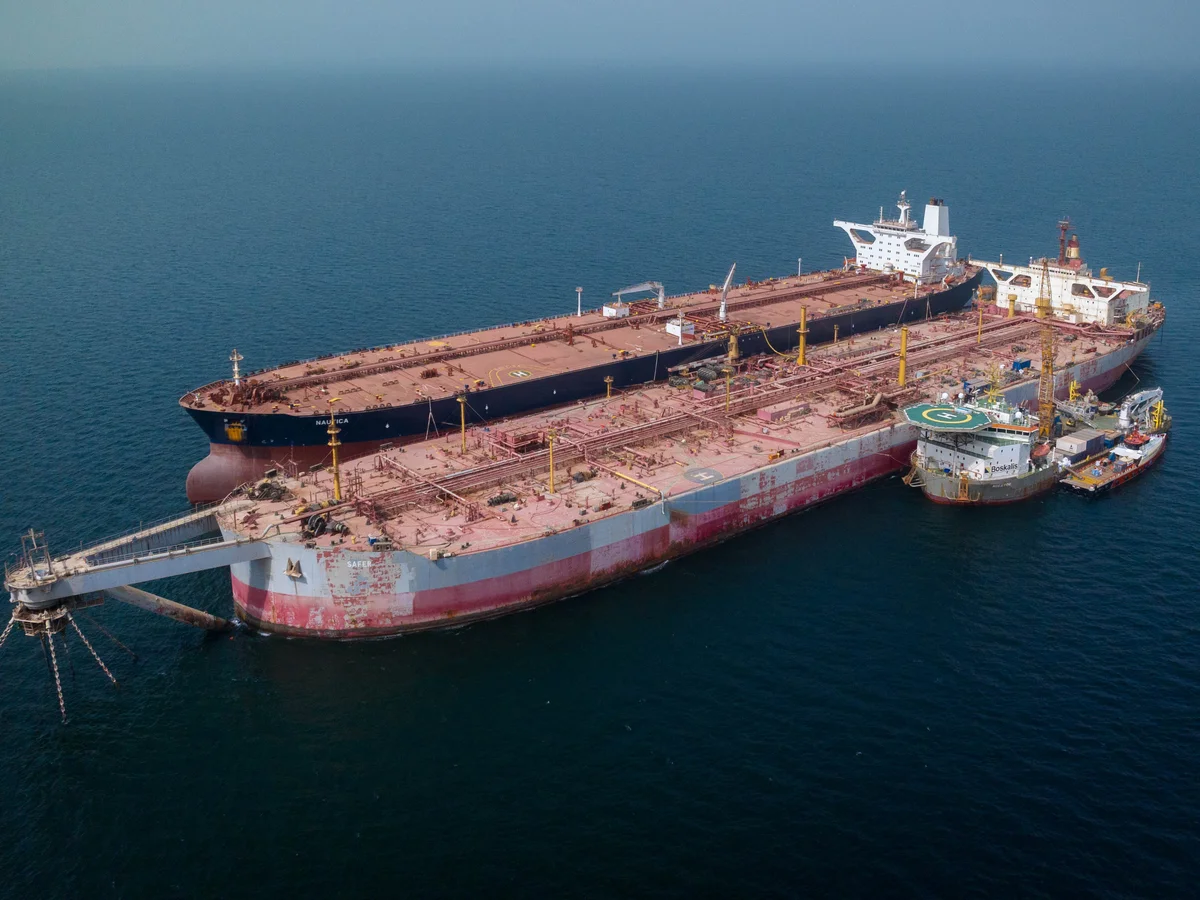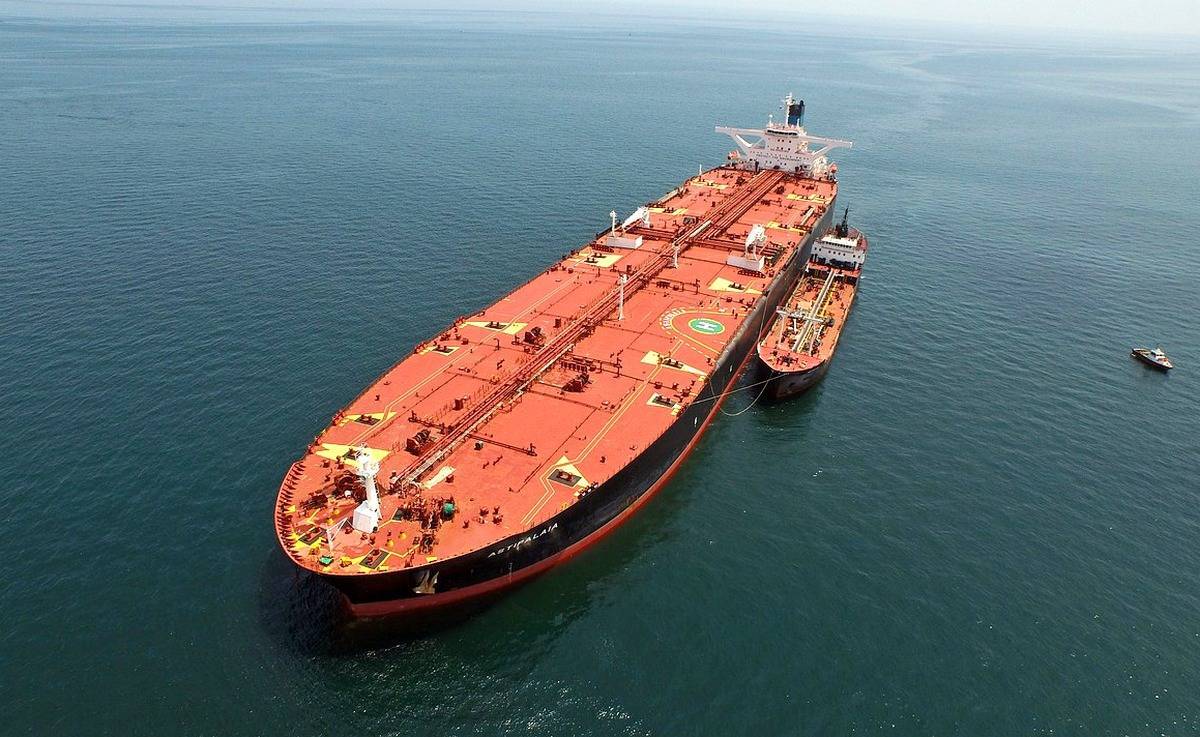
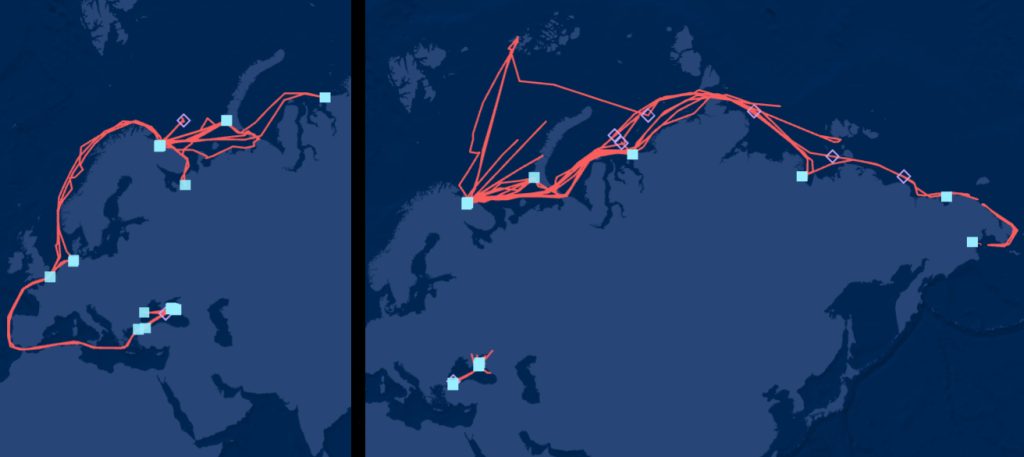
The 26-year-old tanker Sofia made several transit voyages per year along the Northern Sea Route during the summer-autumn navigation season of 2022-2025.
According to Global Fishing Watch, the tanker Sofia not only navigates the Black Sea, but also navigates along the entire Russian Arctic coast during the summer navigation season, from Murmansk to Anadyr.
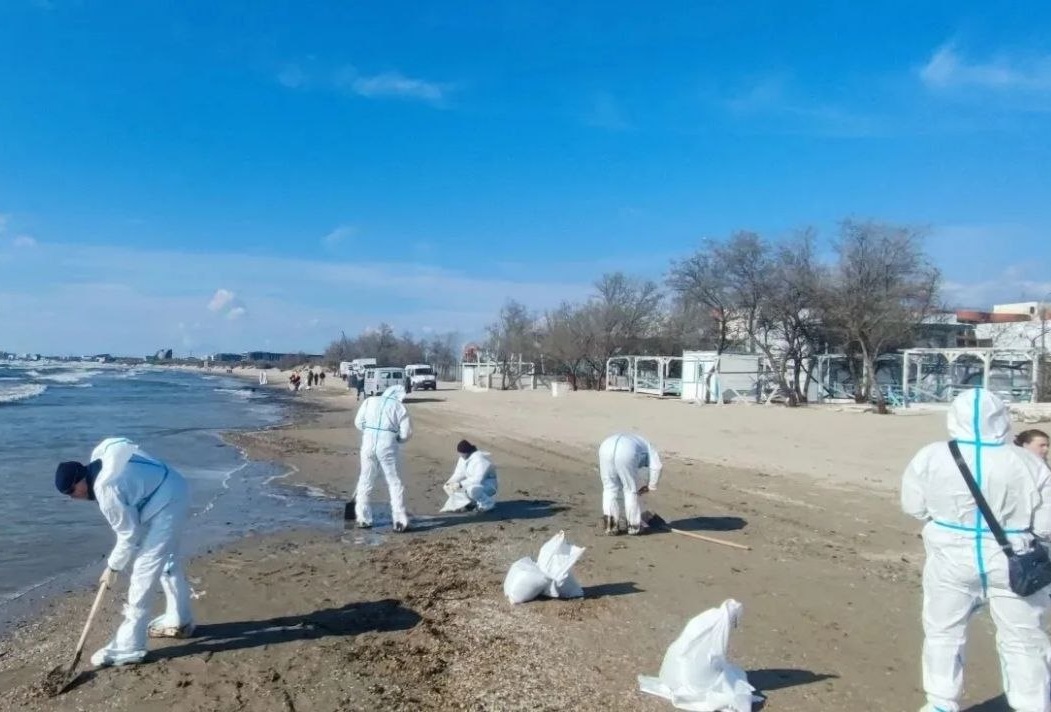
On April 7, an oil spill occurred near Anapa. The Russian shady tanker Sofia (IMO 9211999) was in close proximity at the time.
According to the Transparent World operational environmental monitoring project, which detected the spill on satellite imagery, it occurred overnight into the morning of April 7 at 44°51’20» N, 36°42’17» E, approximately 47 km west of Anapa.
The initial spill area was approximately 8 km2. By April 17, it had grown to 581 km2. Then, on April 18, the spill split into two larger fragments, measuring 220 and 228 km2, which subsequently moved out to sea.
Moreover, in May 2022, shortly after the war began, the vessel changed its flag from Maltese to Russian and, while sailing along the European coast from Norway to the Bosphorus Strait, as well as occasionally in other waters, began turning off its transponder signal (AIS) to conceal its true location.
This practice can lead to responsible authorities learning later about an accident on a vessel, which means they will be less able to respond to it effectively. This is what happened with the tanker Sofia—its transponder was disabled at the time of the accident.
When using shadow fleet vessels, the associated risks are further increased by the opaque ownership structure and, in some cases, the lack of adequate insurance to cover damage, as well as the age and deterioration of the vessel itself. For example, the Sofia is an Aframax tanker without an ice class, built in 2000.
However, the oil spill on the tanker was already concealed, and it only became known when the oil slick reached the major city of Anapa. The fact that the Sofia was the source of the pollution was discovered solely through an environmental NGO, not an investigation by the responsible authorities.
This is a shipping area located near the bases of the Marine Rescue Service and the Ministry of Emergency Situations. Meanwhile, along the entire Russian Arctic coast, emergency rescue centers are located in only eight settlements, and the distance between the two neighboring centers in Pevek and Tiksi on the route from Murmansk to Anadyr is approximately 1,500 km by air and approximately 2,000 km by sea. There are also significantly fewer settlements on the Russian Arctic coast whose residents could have promptly detected and reported a spill than on the Black Sea coast.
Meanwhile, in 2025 alone, 100 shadow fleet vessels were recorded on the Northern Sea Route (NSR). In 2026, Rosatom, the NSR’s infrastructure operator, stopped publicly publishing the list of vessels it had granted permission to navigate the NSR. It also stopped publishing information on the current location of vessels along the route and data on accidents and incidents along it.
Also worth noting are two instances in the past six months in which Russia refused to provide assistance to its vessels in accidents. One of these vessels was the LNG tanker Arctic Metagaz, which was allegedly attacked by Ukrainian unmanned boats and drones near Sicily.
The vessel, which was sailing under the Russian flag, received no assistance from Russian authorities, other than sending the Russian crew home after their rescue by the Libyan Coast Guard. The Arctic Metagas is still adrift in the Mediterranean. The tanks that survived the explosion may contain LNG and liquid fuel, posing a danger to other vessels, coastal communities, and marine and coastal ecosystems.
In November, the Gambian-flagged tanker Kairos, belonging to the Russian shadow fleet, was also abandoned without assistance. Fortunately, it had unloaded oil before the accident and posed no serious threat to the environment. However, it soon became clear that ten crew members remained on board without the captain and first mate, with only limited food, water, and energy. Bulgaria launched a rescue operation on December 7, while the Russian side made no efforts to assist the crew or the vessel.
Thus, we see once again that Russia lacks not only the ability but also the desire to address the negative environmental consequences of its fleet’s operations, investigate their causes, or even save the lives of crew members in distress. Whenever possible, unless these consequences threaten political or economic interests or cause serious public discontent, they are preferred to be avoided.
In the Russian Arctic, with its sparse population and vast distances between settlements, an oil spill or other serious man-made accident can be similarly ignored unless it threatens a major infrastructure project.