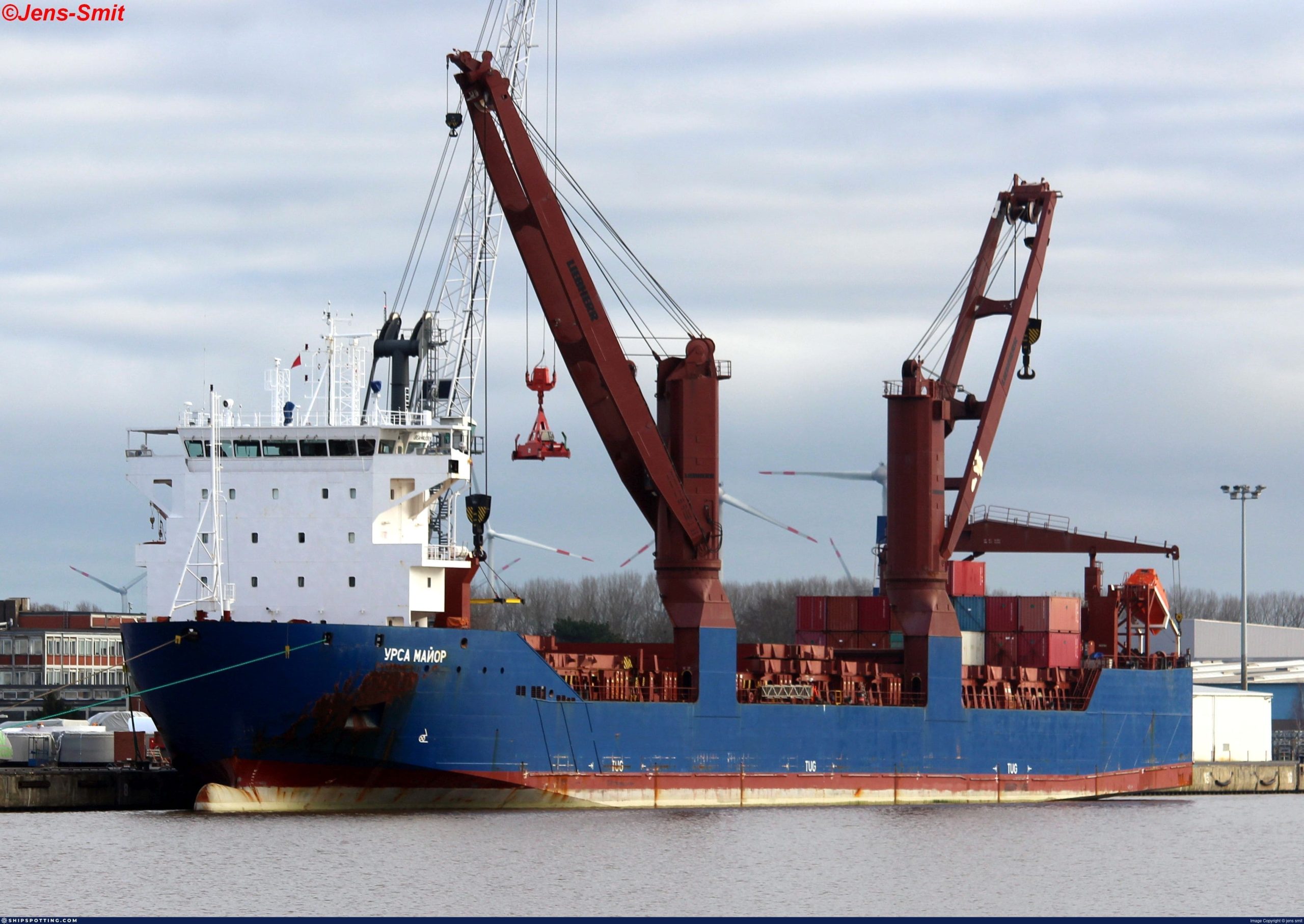
A Spanish investigation has established that the Russian cargo ship Ursa Major, which sank near Cartagena in December 2024, was transporting a secret strategic cargo. This ship is part of the shadow fleet and is used for secret transportation.
According to the investigation, on board the ship were two housings of nuclear reactors of the VM-4SG type (this type of reactor is used specifically for arming submarines), which were intended for North Korea, reported the Spanish publication La Verdad.
The ship was part of the so-called Russian «ghost fleet» and was sailing along an atypical route from St. Petersburg to Vladivostok via the Mediterranean Sea.
Officially, the captain declared that he was carrying empty containers, port cranes and auxiliary equipment, but aerial photographs revealed undeclared heavy containers at the stern.
Spanish services recorded a sharp change in course and loss of propulsion of the vessel on December 22, and on December 23, a distress signal was received 60 nautical miles from Cartagena.
An inspection of the damage showed a hole in the hull with metal deformation inward, indicating damage from the outside, rather than an internal explosion.
The size of the hole did not correspond to a classic torpedo, but is consistent with damage from a supercavitating armor-piercing torpedo without a large warhead.
Spanish authorities do not rule out that the intervention could have been aimed at disrupting the secret delivery of nuclear technology to the Kim regime.
The situation escalated after the appearance of the Russian landing ship Ivan Gren, which demanded that the Spanish ships move away from the accident area.
After the use of flares and electronic countermeasures, the Ursa Major disappeared from the surface and sank at a depth of about 2,500 meters.
Seismographs recorded vibrations consistent with the underwater detonation of a low-yield explosive at the time of the ship’s sinking.
Later, the Russian oceanographic vessel Yantar arrived at the accident site, which, according to estimates, could have carried out an operation to destroy or conceal the remains of the secret cargo.