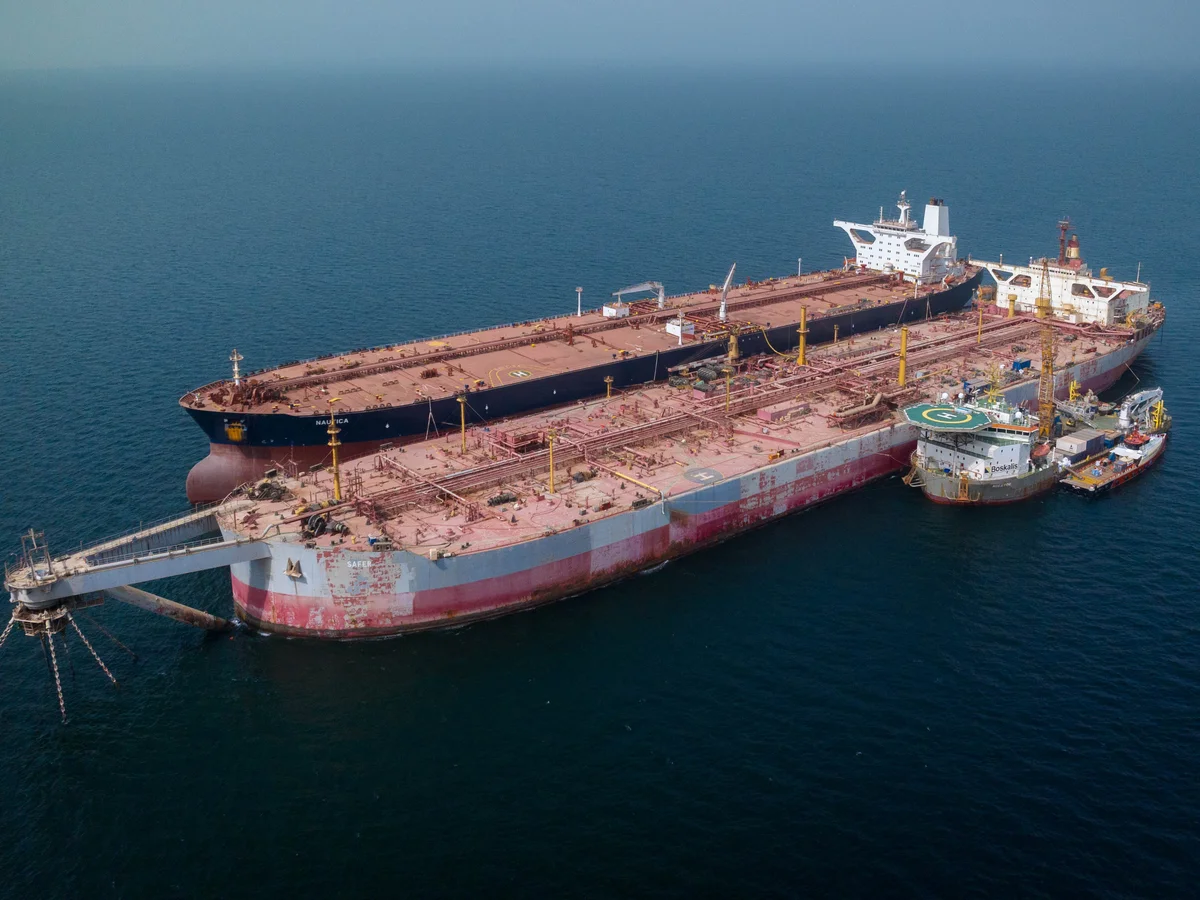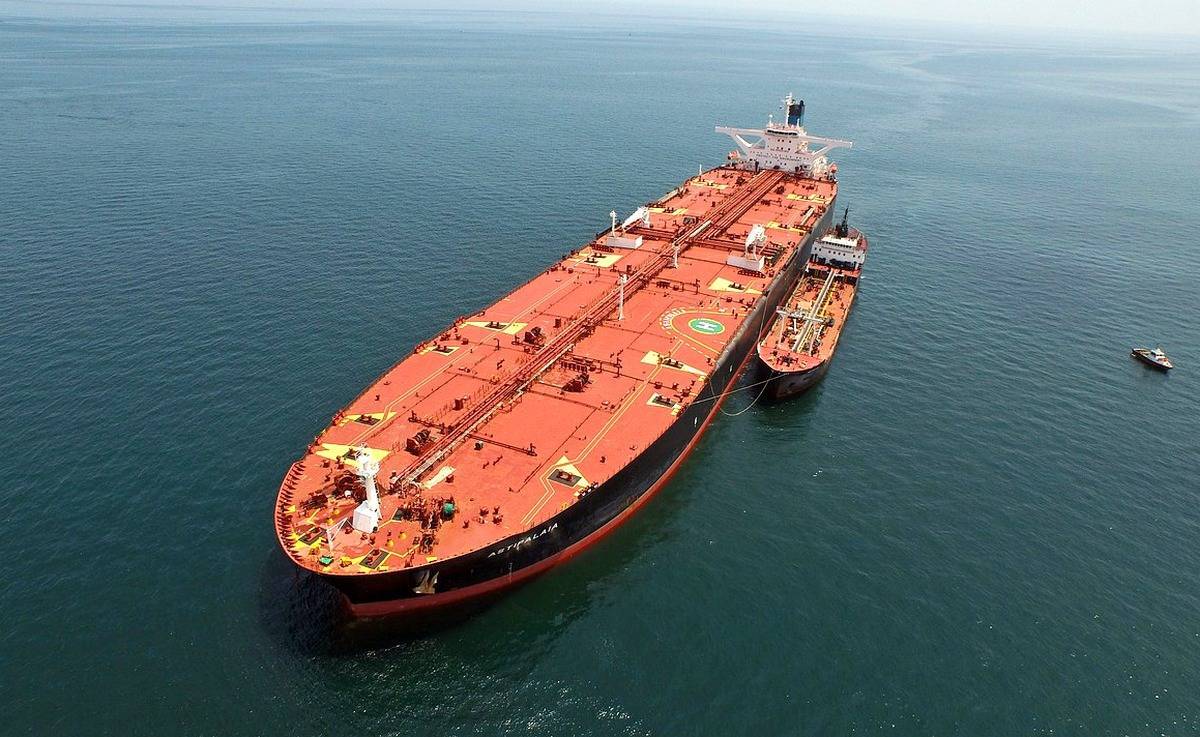
In an attempt to avoid a catastrophic overflow of its oil storage facilities, Iran has begun returning old, long-unused supertankers to service. The vessel in question is the Nasha, built in 1997 and sailing under the Iranian flag. According to satellite imagery, the vessel was moored at the terminal on Kharg Island last Sunday, Bloomberg reports.
The tanker appears to have been urgently reactivated after several years of decommissioning: it last delivered a cargo of oil two or three years ago. It is unclear what the Nasha has been doing since then, as the tanker has long since switched off its transponders and gone into radio silence.
The naval blockade imposed by the Donald Trump administration has led to a logistical collapse. Tankers loaded with Iranian oil are unable to break through the US Navy’s cordon and are stuck in the Persian Gulf or Gulf of Oman. Meanwhile, empty vessels are unable to cross the Strait of Hormuz in the opposite direction to pick up new oil.
As a result, Iran is rapidly depleting its physical storage capacity for its continuously produced oil. According to research firm Kpler, at current production rates, Iran has only three weeks’ worth of spare storage capacity.
The exact number of empty tankers linked to Iran and accessible to it within the Persian Gulf is impossible to determine due to electronic warfare systems and disabled transponders. However, analysts are certain that if the blockade is not lifted, Tehran will soon be forced to resort to the extreme measure of physically shutting down wells and halting production, something the country is desperately trying to avoid through unconventional logistical arrangements.
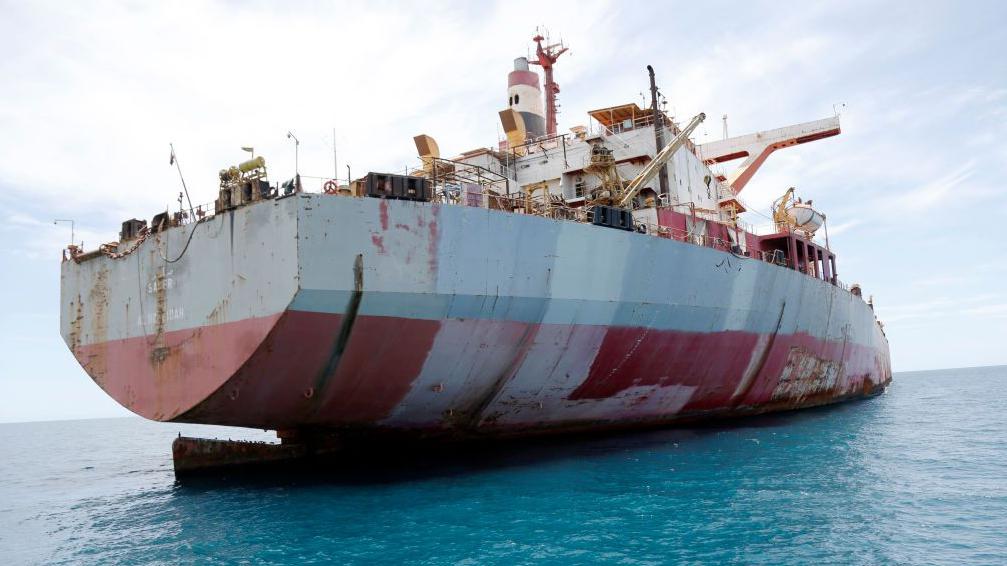
Reactivating such old vessels will help Iran in the short term, but it does not solve the fundamental problem of the US blockade. Half of Iran’s tankers have already exceeded the recommended 20-year safe operating life. Seven vessels are classified as «extremely high risk»: they are over 25 years old, and three tankers have been in service for over 30 years.
These vessels operate outside standard control mechanisms and do not meet maritime safety requirements. Reserve vessels are often uninsured. Potential damage from a potential disaster is estimated at between $860 million and $1.6 billion.